Click on image to open full size.


Sir John Lavery RA RSA RHA (1856-1941)
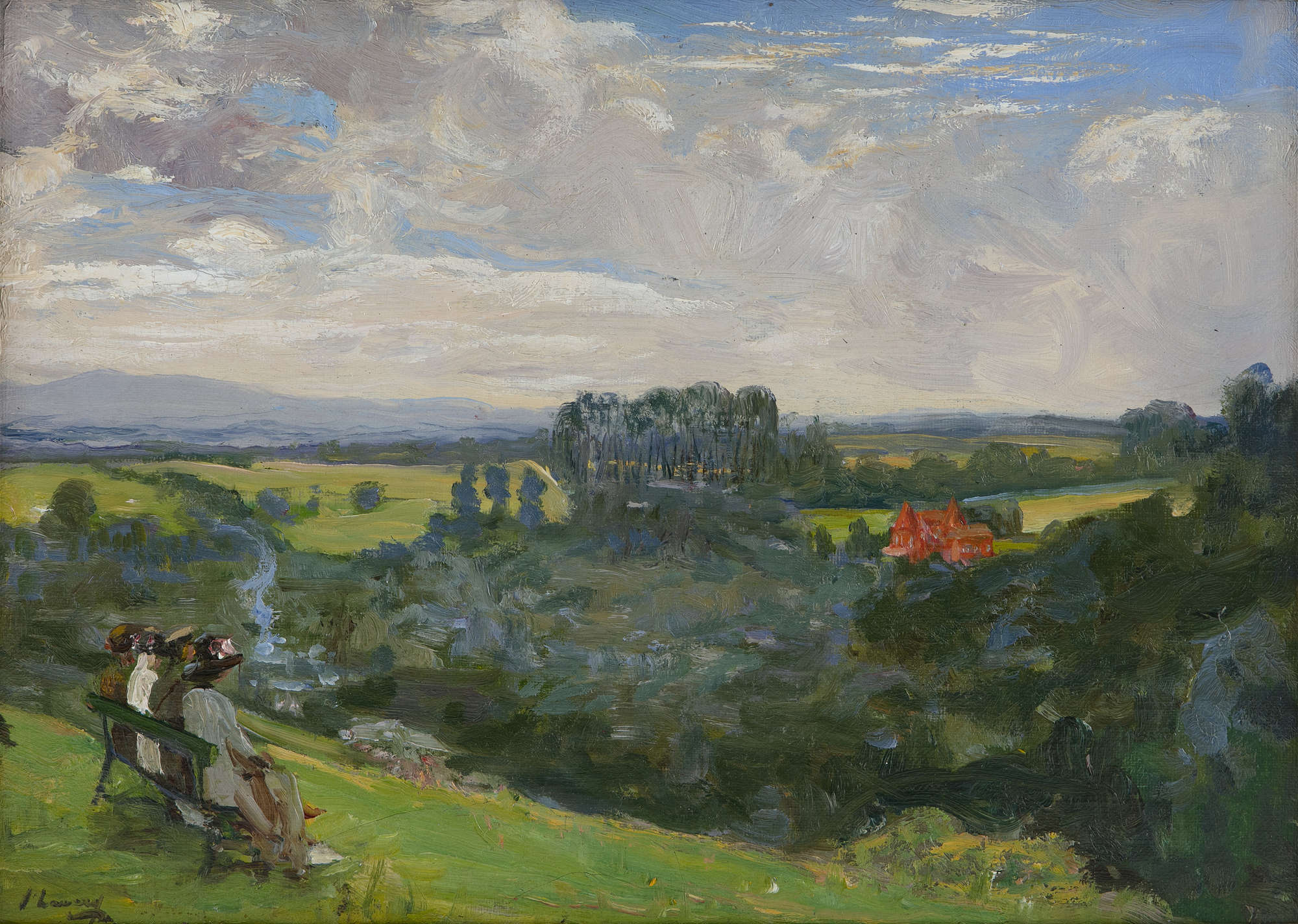
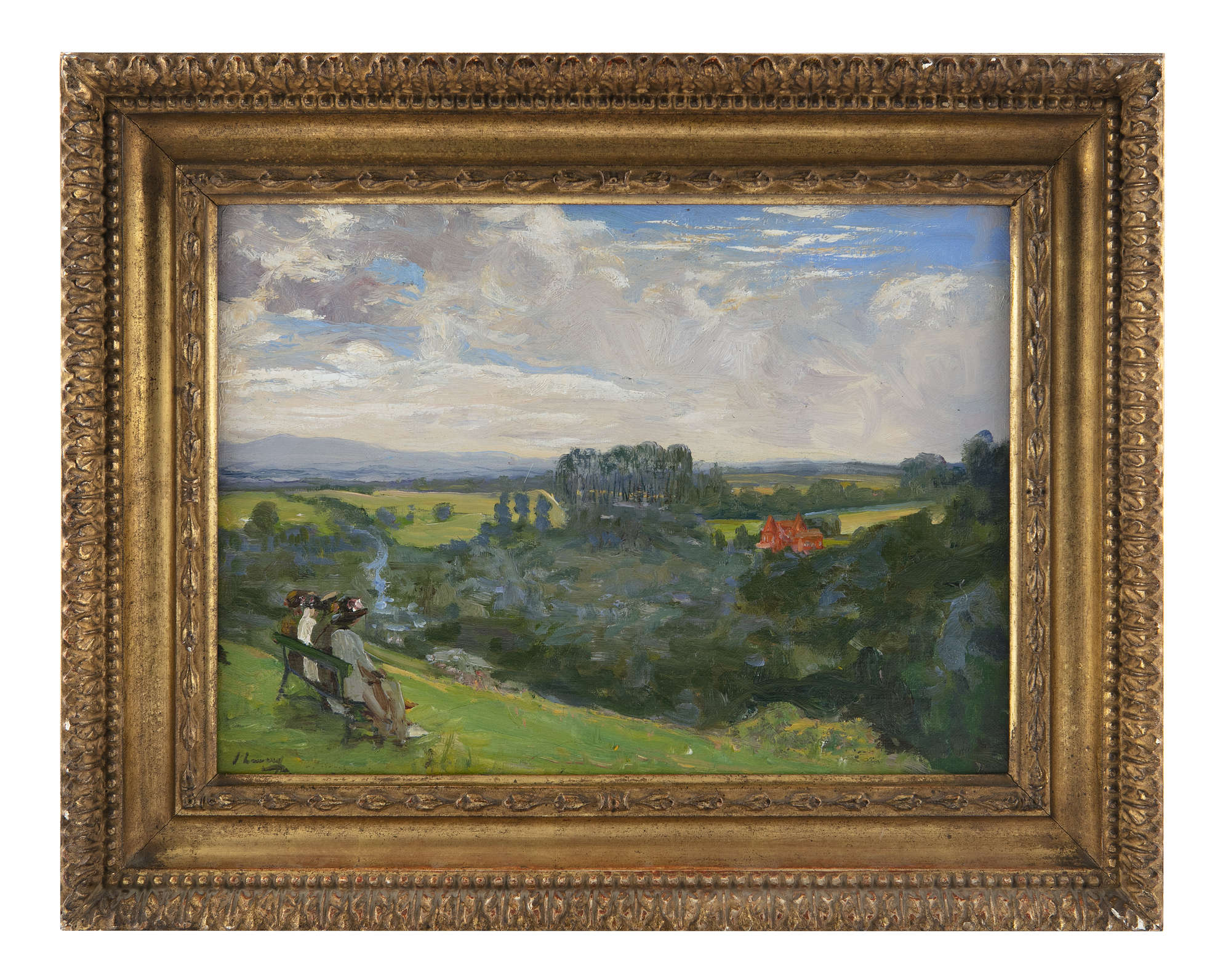
The Red House - from the Phoenix Park
Oil on canvas board, 25 x 35cm (10 x 15")
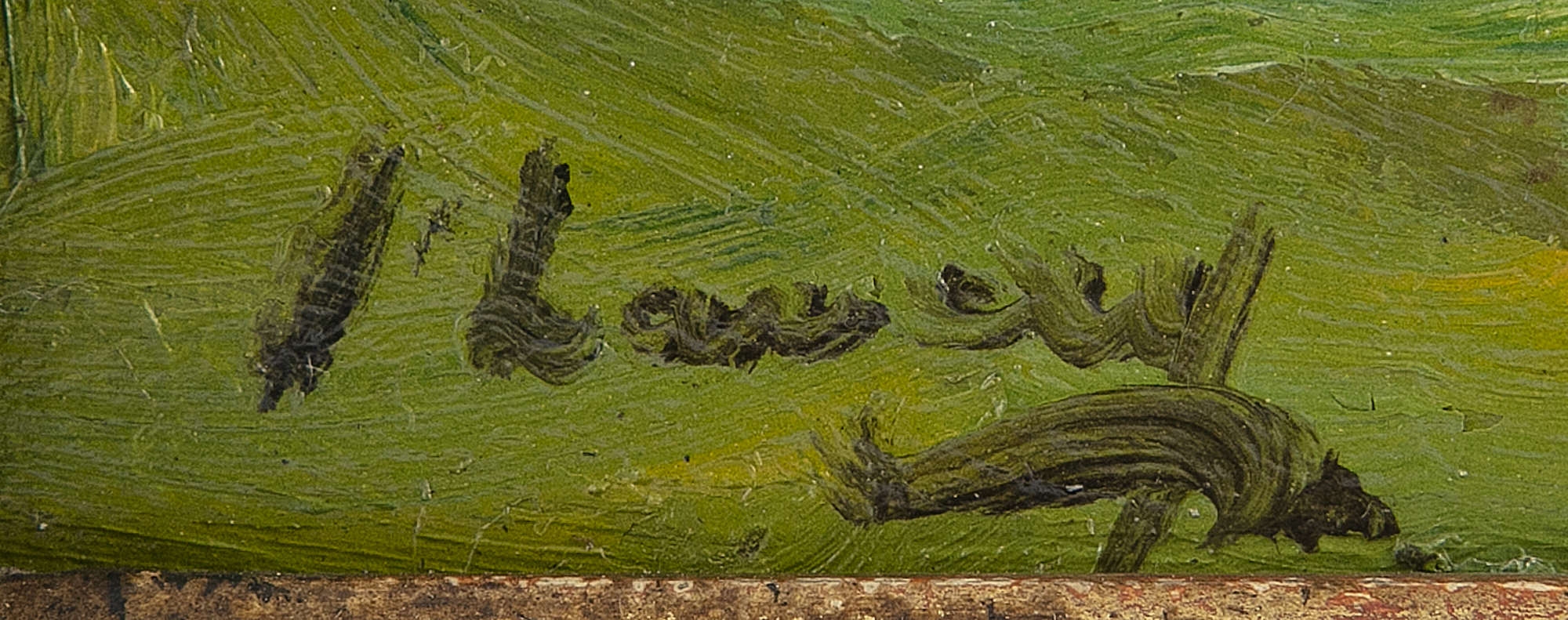
Signed; signed, inscribed and dated verso
Provenance: Gifted to Maeve...
Sir John Lavery RA RSA RHA (1856-1941)
The Red House - from the Phoenix Park
Oil on canvas board, 25 x 35cm (10 x 15")
Signed; signed, inscribed and dated verso
Provenance: Gifted to Maeve Healy, daughter of Tim Healy (the first Governor General of Ireland).
Sir John Lavery occupies a unique position in the history of Irish art. Although he was the pre-eminent society portrait painter in England throughout the period in which Ireland gained its independence, he wasnt just sympathetic to the Irish cause: Michael Collins was a close friend and stayed with Lavery and his wife Hazel at their home in London during the Treaty negotiations. Lavery was a Northerner, born in Belfast. Orphaned early on, he was raised by relatives and sent to school in Scotland, began working and studying art in Glasgow, then Paris, then with the plein air painters at Grez-sur-Loing (where he was, he said, happiest), all of which broadened his horizons immensely. He always attributed a major part of his public success to Hazel (they married in 1910), herself a painter, socially skilled and a natural communicator.
He knew and painted pretty much everyone involved in political developments in Ireland from the pre-First World War years to the establishment of the Free State. That is to say, he knew people on all sides, Irish, Unionist and English, and felt secure enough to advise Churchill, when he asked his opinion, that the English should leave Ireland to the Irish. It is hardly surprising, then, that he numbered among his friends the Irish nationalist MP, barrister and writer Tim Healy. Born in Bantry in 1855, Healy moved to England and worked for a rail company while still in his teens. He soon became involved in the Irish Home Rule movement and grew close to Parnell, who encouraged him to run for parliament in 1880, launching his political career.
Their relationship soured, however, over the OShea scandal. Healy, a famously wasp-tongued, traditional catholic, objected fiercely to Parnells extra-marital affair. He found his own path through the dramatic political developments, giving up the Home Rule cause as lost and declaring himself a supporter of independence but against violence. He was legal consul for many Sinn Féin members in various legal proceedings. Because, like Lavery, he knew and talked to everyone, he seemed an ideal candidate for the new position of Governor General, the Crowns representative in the Free State (as it happened, Kevin OHiggins was a nephew of his). He excelled in the role.
His home was Glenaulin in Chapelizod, which Lavery dubbed The Red House. Hence his inscription, The Red House from the Phoenix (sic) Park, To The Misses Healy on the back of this painting, which highlights Glenaulin in red, in a view towards the southwest with the Dublin Mountains in the distance. In the foreground, seen from the rear, four people are seated on a park bench.
The painting was a gift to Maev Healy, one of Tim Healys daughters (second from the left). The others depicted are (left to right) Maevs elder sister Lizzy Healy, Mick Buckley of the Irish Army Medical Corps, and his sister, May Buck, who was married to the Healy sisters younger brother Joseph Healy.
Aidan Dunne, August 2019
All bids are placed in Euros (€)
Please note that by submitting a bid you are agreeing to our Terms & Conditions


 Have a similar item to sell?
Make Enquiry
Have a similar item to sell?
Make Enquiry