Click on image to open full size.


Louis Le Brocquy HRHA (1916-2012)
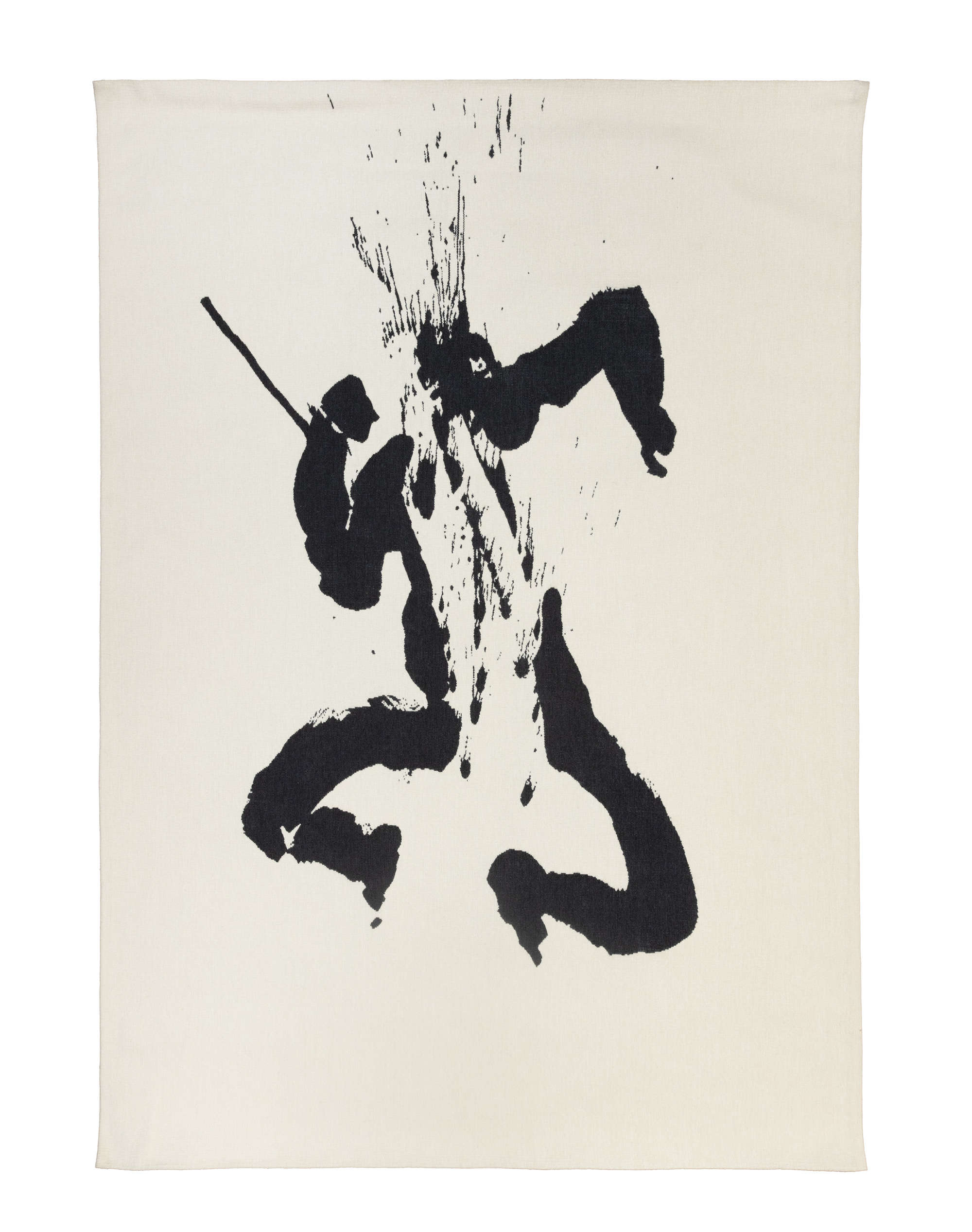
Táin - Cuchulainn in Warp Spasm (1999)
Atelier René Duché, Aubusson tapestry, 184 x 129cm (72½ x 50¾")
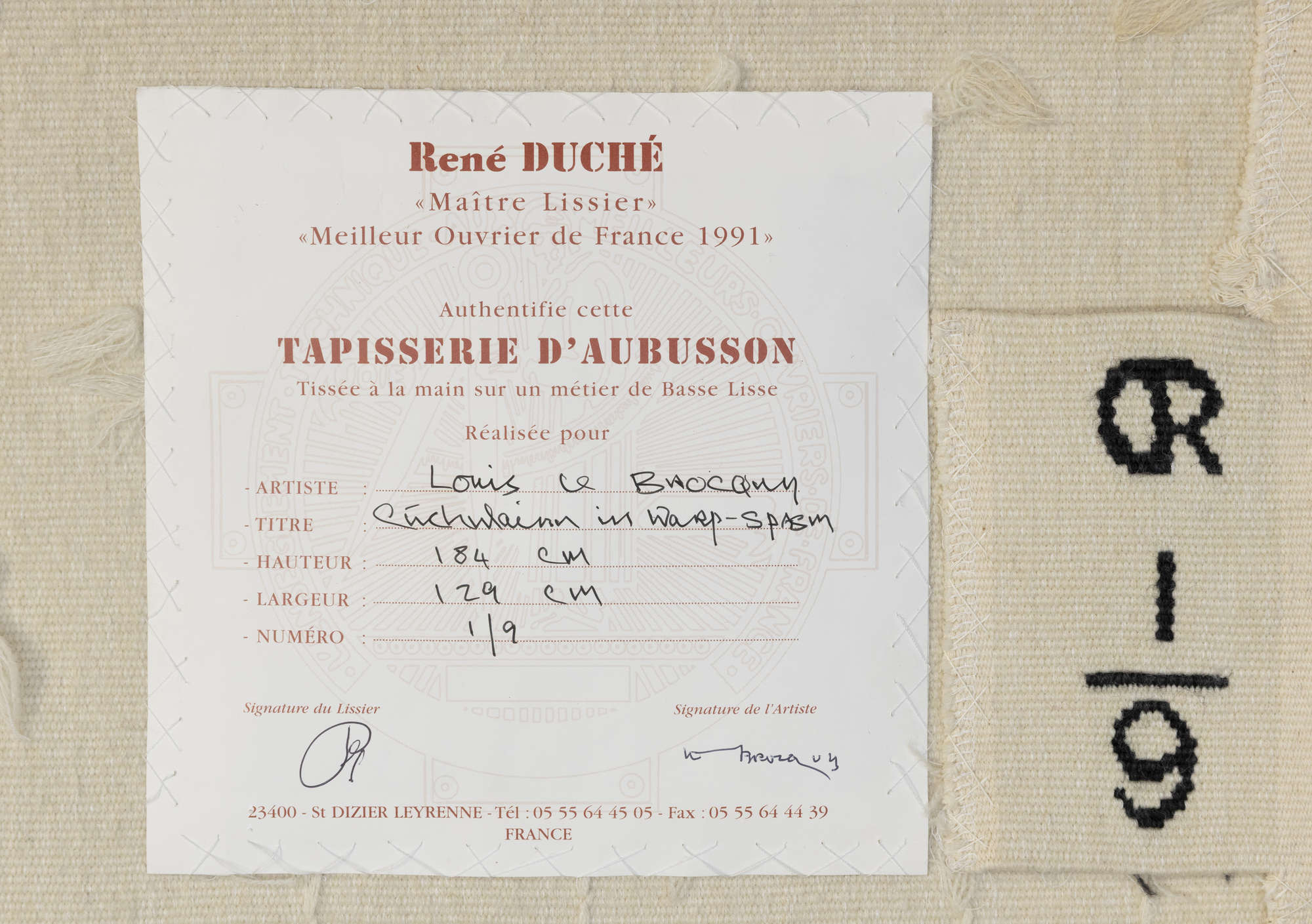
Signed and numbered 1/9 on label verso
Louis le...
Louis Le Brocquy HRHA (1916-2012)
Táin - Cuchulainn in Warp Spasm (1999)
Atelier René Duché, Aubusson tapestry, 184 x 129cm (72½ x 50¾")
Signed and numbered 1/9 on label verso
Louis le Brocquy’s brush-and-ink illustrations for Thomas Kinsella’s translation of the Irish mythological epic the Táin Bó Cúailnge, published by Liam Miller’s Dolmen Press in 1969, rank as one of his finest graphic achievements. When Miller approached him, le Brocquy mulled over the best way to approach such a challenge, and his solution was ingenious. Like several other painters in the US and Europe at the time, he harnessed an Eastern, spontaneous, calligraphic technique, generating images that imbued the ancient tale with vibrant immediacy.
Even as he worked on the original drawings he wondered how the images would translate into lithography and tapestry. He had long been fascinated by tapestry as a medium. When Edinburgh Tapestry Weavers invited him to design a tapestry in 1948, he was keen to accept, and to work according to a classical, pre-Renaissance technique he’d learned from the great Jean Lurcat. He liked this method because of its absolute fidelity to the artist’s intentions. He went on to work periodically with tapestry, forming an especially effective alliance with the renowned tapestry ateliers at Aubusson in France.
A commission to create a large-scale tapestry for the PJ Carroll & Sons building in Dundalk in 1970 led to an epic work, The Táin, woven by Aubusson, using several colours. When he later returned to the theme, in the 1990s, he looked to the original, bold conception of using purely black and white. As well as producing the monumental Army Massing he created a number of smaller, though still substantial tapestries focussing on the figure of the super-heroic Cuchulainn. One of Cuchulainn’s unique characteristics was that, when under pressure and in mortal peril, he experienced a transformative ‘ríastrad’ or ‘warp-spasm’ - not unlike The Incredible Hulk - becoming, in Kinsella’s words “a monstrous thing, hideous and shapeless, unheard of,” capable of wreaking havoc on his enemies.
Born in Dublin in 1916, Louis le Brocquy grew up to become one of the leading Irish artists of the 20th century. His love of painting triumphed over expectations that he would enter the family’s oil refinery business and, encouraged by his mother Sybil, he set off to learn by studying the masters in the great galleries of Europe. Back in Ireland in the early 1940s, he quickly became a central figure in the fledgling Modernist movement. His early paintings, mostly of families and marginalised Traveller communities, gave way to studies of the isolated human presence throughout the 1950s. In the following decade he began a new series of works centred on the human head, leading on to the innovative, incisive portrait studies of Irish literary giants James Joyce, William Butler Yeats, Samuel Beckett and more, for which he probably remains best known.
Aidan Dunne, October 2025
All bids are placed in Euros (€)
Please note that by submitting a bid you are agreeing to our Terms & Conditions


 Have a similar item to sell?
Make Enquiry
Have a similar item to sell?
Make Enquiry