Click on image to open full size.


HARRY WINSTON: A RARE PAIR OF RUBY AND DIAMOND EARCLIPS, CIRCA 1965
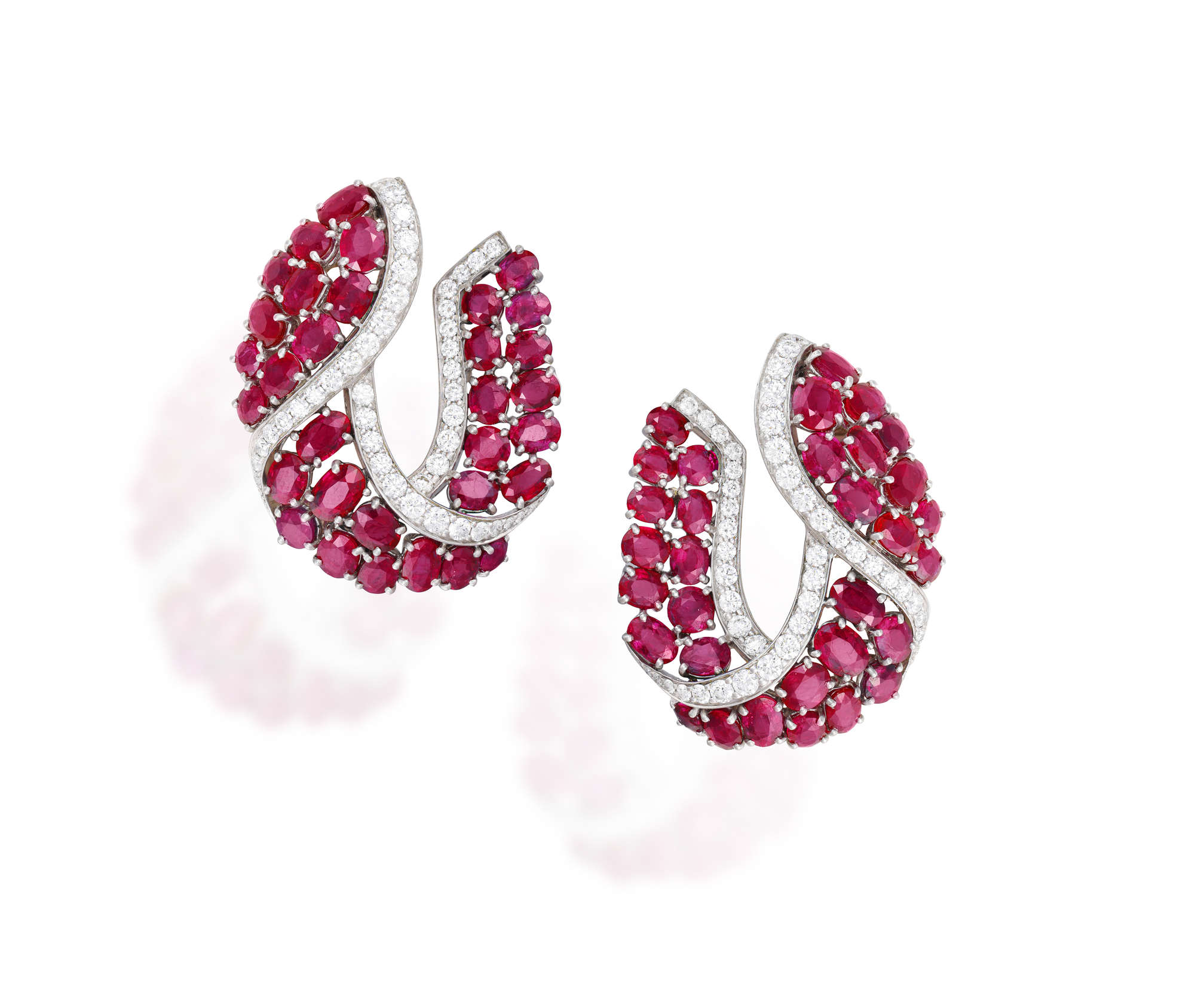
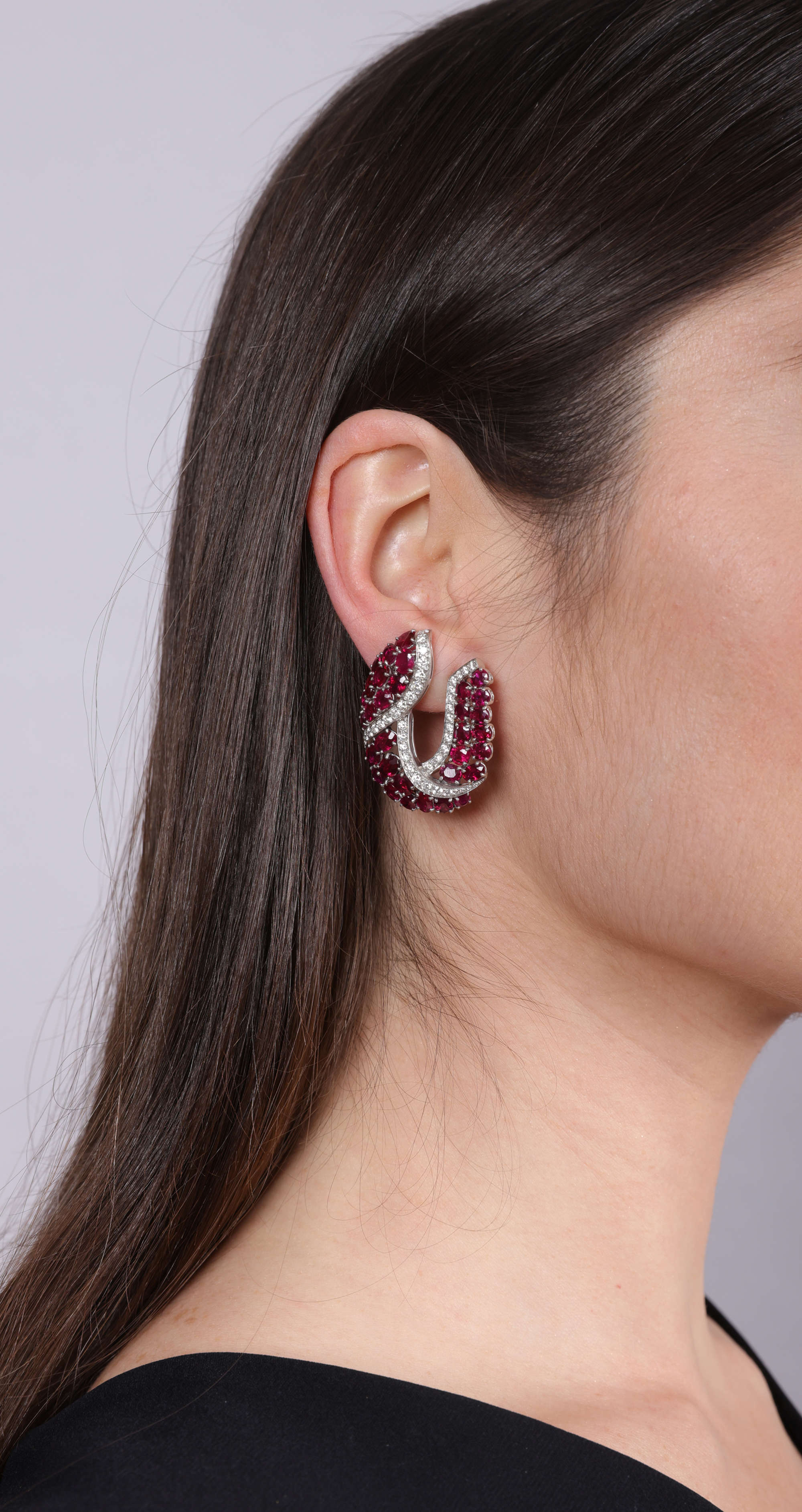
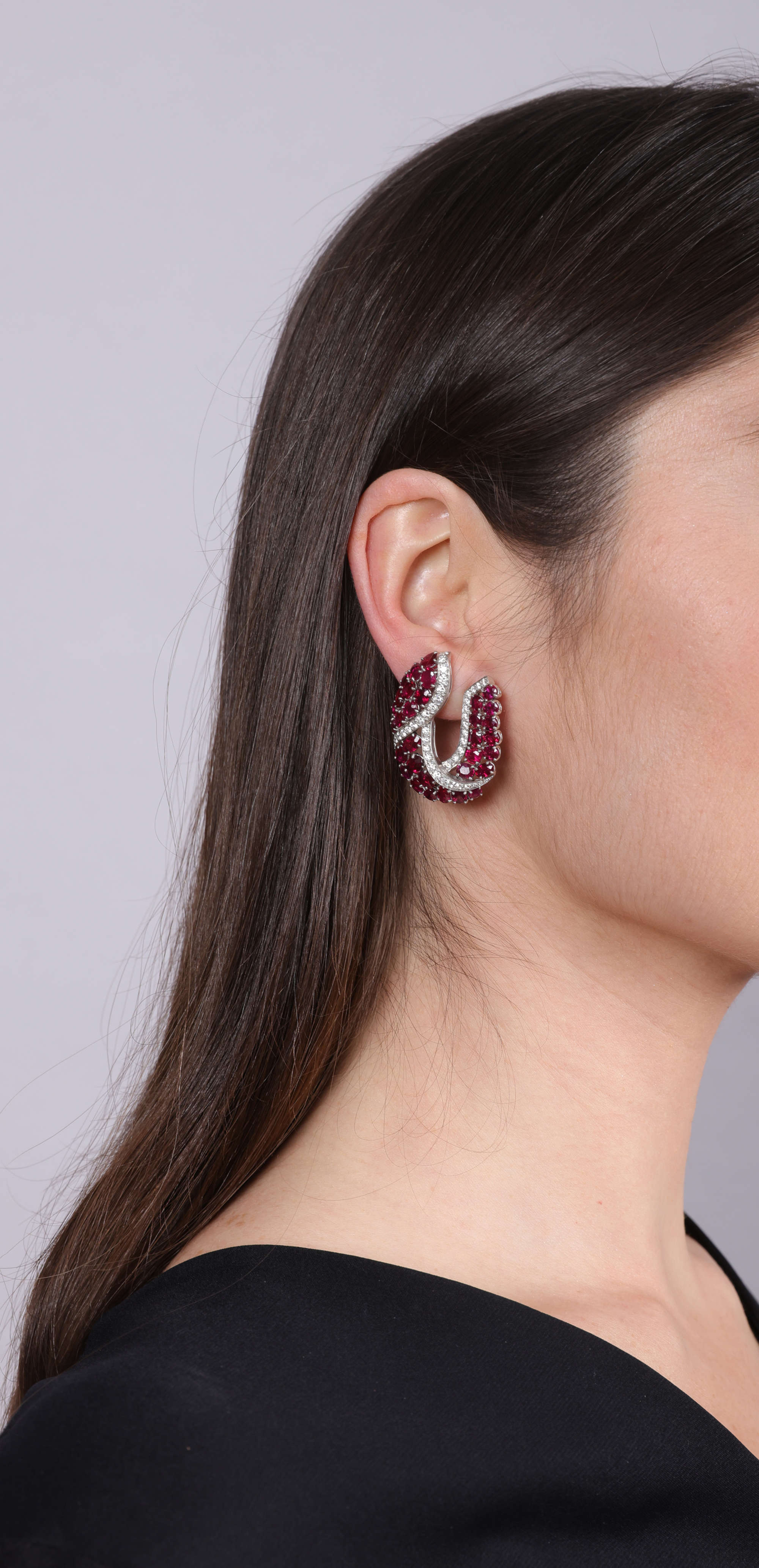
Each composed of a series of oval and circular-cut rubies, highlighted with brilliant-cut diamond borders, mounted in platinum...
HARRY WINSTON: A RARE PAIR OF RUBY AND DIAMOND EARCLIPS, CIRCA 1965
Each composed of a series of oval and circular-cut rubies, highlighted with brilliant-cut diamond borders, mounted in platinum and 18K gold, signed Winston, with maker's mark 'JT' for Jacques Timey, length 3.5cm
Accompanied by a report from the SSEF laboratory in Switzerland, stating that the 64 rubies are natural, of Burmese origin, with no indications of heating (based on a sampling), none to minor amount of oil in fissures at the time of testing. Report number 128706, dated April 21st 2023.
"Talk to me, Harry Winston, tell me all about it!"
Marilyn Monroe, in Gentlemen prefer Blondes
Harry Winston’s passion for gems was ignited in his father’s small New York shop. At twelve he famously rescued a two‑carat emerald from a pawnbroker’s tray for 25 cents and resold it for $800. By the 1920s he was buying entire estate collections, and remodelling the stones, and in 1932, he formally established his Fifth Avenue salon.
Winston became known for acquiring legendary stones. In 1935 he purchased the 726‑carat Jonker diamond, sent it on a publicity tour with Shirley Temple and cut it into a dozen polished gems. When he acquired the 45.52‑carat Hope Diamond, he famously wrapped the blue gem in brown paper and mailed it to the Smithsonian for $145.29 in postage and insurance. Winston joked that if you couldn’t trust the U.S. mail, “who can you trust?” and was known to carry loose diamonds in his pockets and even to keep a hidden vault in his office.
In the 1940s Winston and designer Nevdon Koumrouyan devised the Winston Cluster, a three-dimensional setting inspired by snowflakes on a holly wreath. By grouping pear , marquise and round diamonds at varying heights and angles, they maximised each stone’s sparkle while hiding the platinum framework. This design remains central to the brand’s style to this day.
Winston also believed in sharing his treasures. In 1949 he launched the Court of Jewels, a philanthropic touring exhibit of his most important diamonds and coloured stones. The exhibition, which included the Hope Diamond and other legendary gems, travelled across the United States and abroad until 1953 and raised funds for local hospitals and children’s charities. Four years earlier he had revolutionised red carpet marketing by lending jewels to actress Jennifer Jones for the Academy Awards; Jones’s win ensured worldwide publicity and established a tradition of celebrities wearing Harry Winston on the red carpet, and most notably Marylin Monroe in the movie ‘Men prefer the Blondes’.
Behind the scenes, master jeweller Jacques Timey executed many of the house’s most celebrated pieces. Operating an independent workshop in Geneva, Timey worked exclusively for Harry Winston; his maker’s mark appears on numerous vintage pieces. He was particularly skilled at fashioning delicate platinum settings for the airy cluster designs and creating versatile jewels like convertible earclips and necklaces set with rubies, emeralds and sapphires.
Harry Winston died in 1978, but his philosophy endures. The company now owned by the Swatch Group continues to pursue exceptional stones and maintains its relationship with the Smithsonian Museum and charitable institutions.
All bids are placed in Euros (€)
Please note that by submitting a bid you are agreeing to our Terms & Conditions


 Have a similar item to sell?
Make Enquiry
Have a similar item to sell?
Make Enquiry