Click on image to open full size.


Evie Hone HRHA (1894-1955)
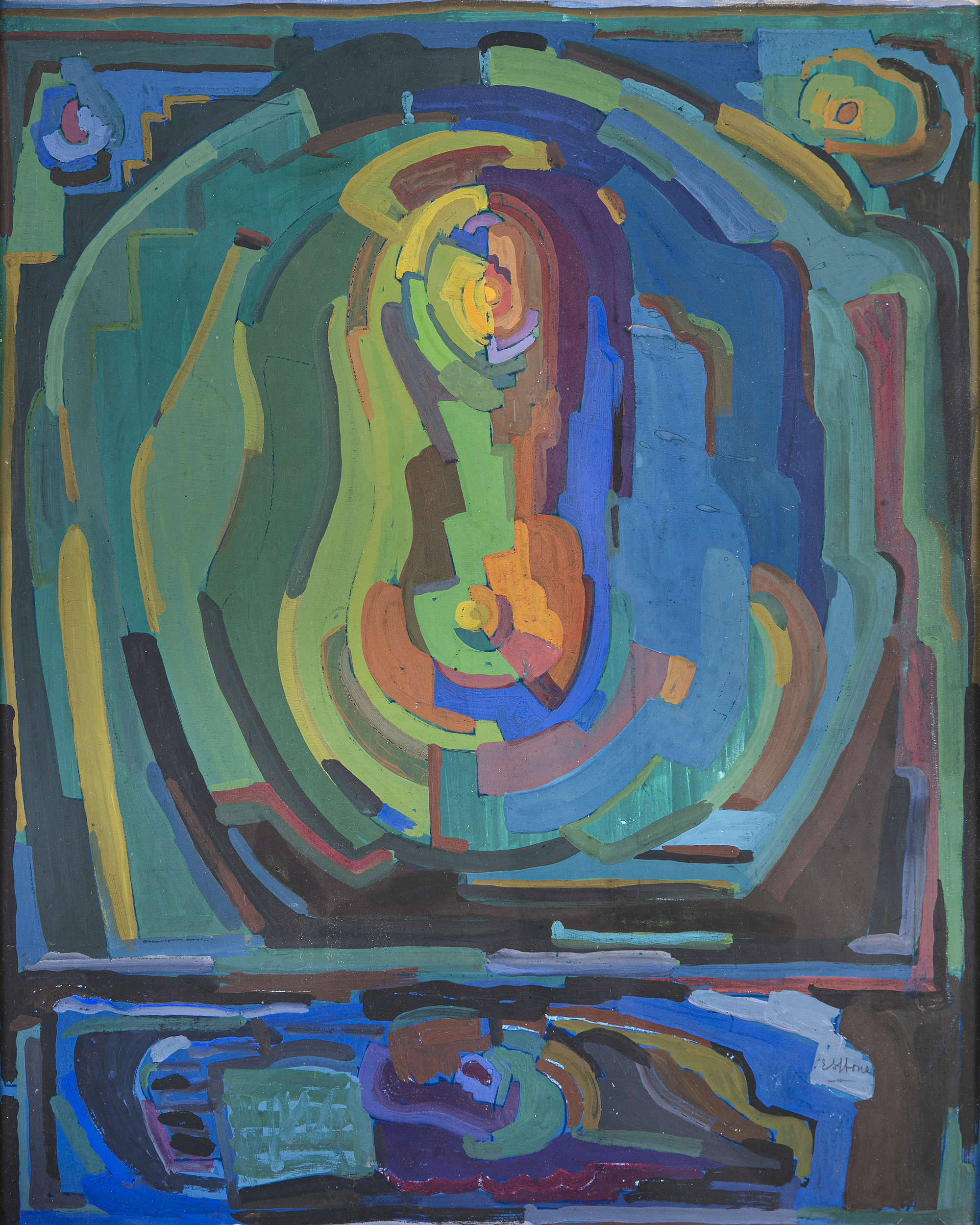
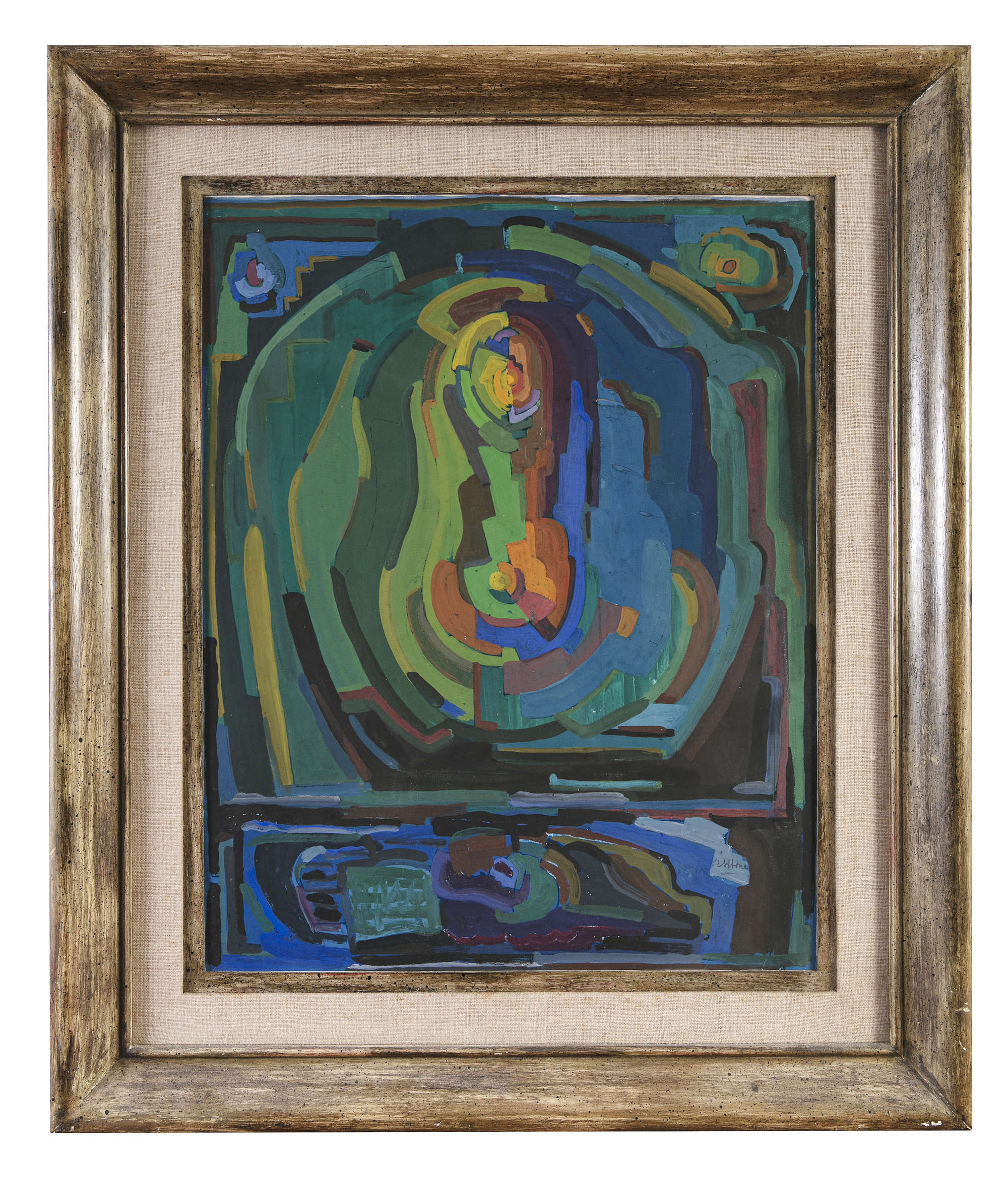
Painting (c.1928)
Gouache on paper board, 54 x 42cm (21¼ x 16½")
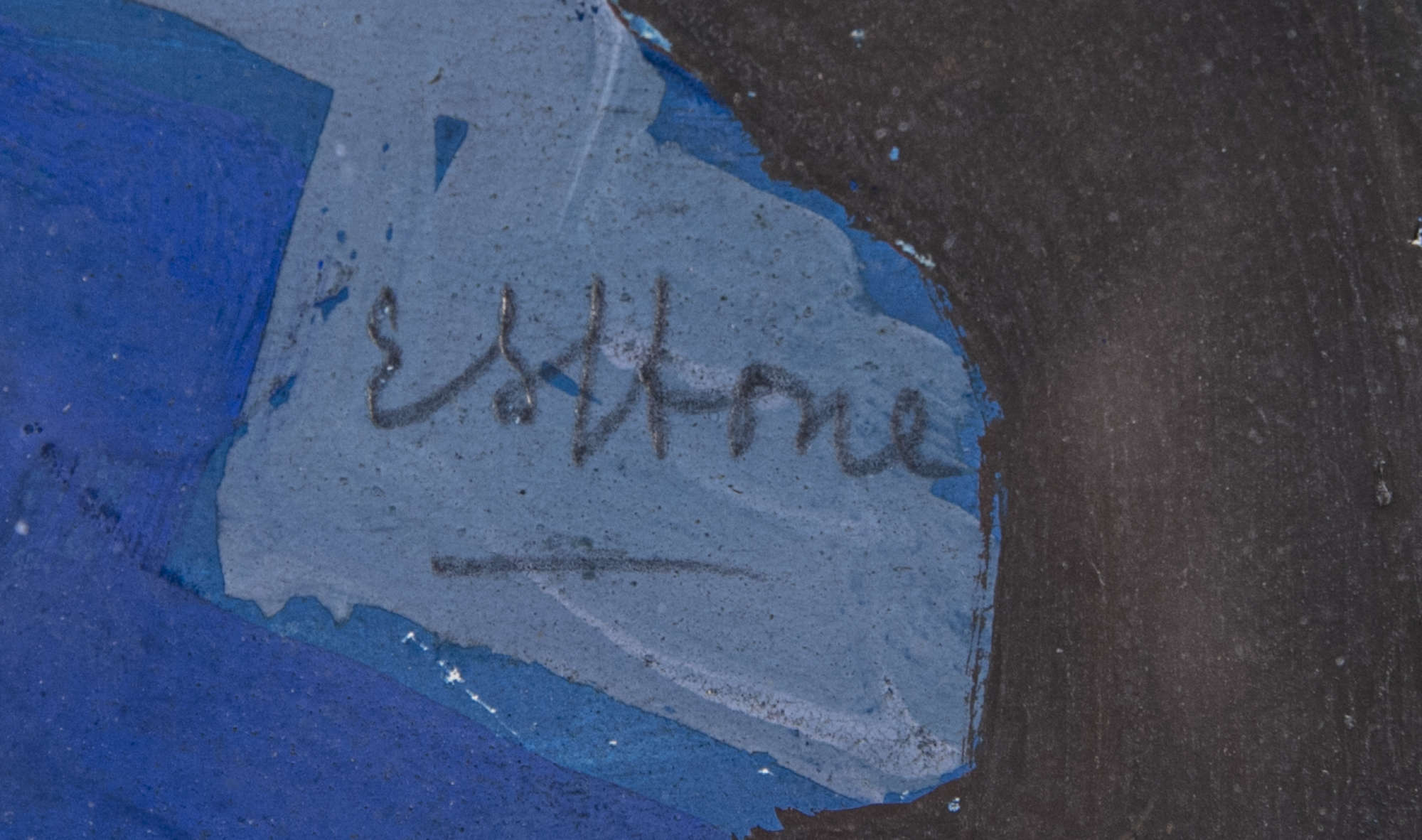
Signed
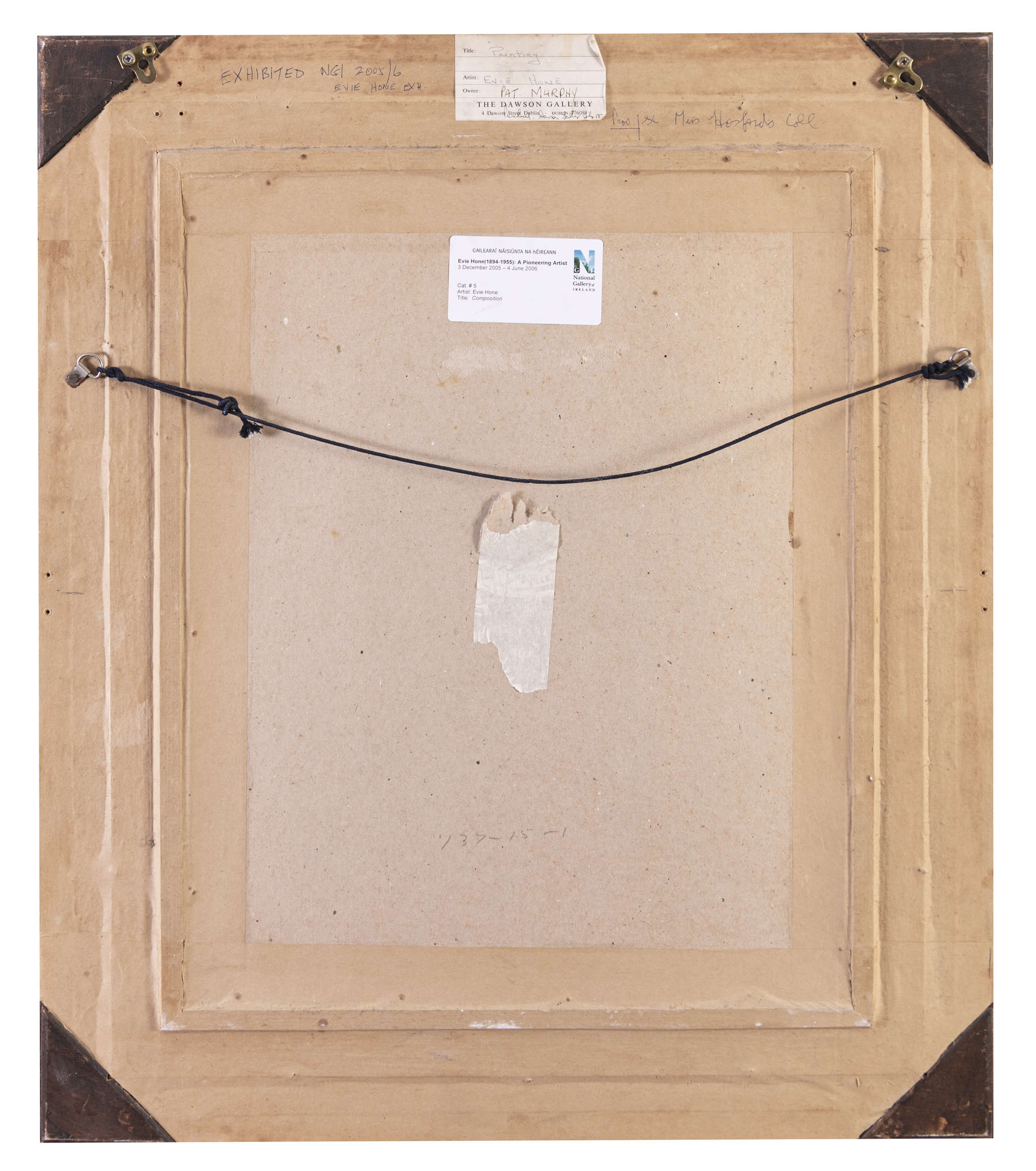
Provenance: Miss Hosford Collection; with The Dawson Gallery, Dublin.
Exhibited: Dublin, National...
Evie Hone HRHA (1894-1955)
Painting (c.1928)
Gouache on paper board, 54 x 42cm (21¼ x 16½")
Signed
Provenance: Miss Hosford Collection; with The Dawson Gallery, Dublin.
Exhibited: Dublin, National Gallery of Ireland, 'Evie Hone: A Pioneering Artist', 2005/6, Catalogue No.5; University of Limerick, 'Familiar Faces', 2008; IMMA, Dublin 2013, Crawford Art Gallery, Cork and F.E. McWilliam Gallery, Banbridge, 'Analysing Cubism'.
Literature: 'Analysing Cubism', illustrated with full colour plate p.133.
While Hone is more well-known for her work in medium of stained glass, an area to which she devoted much of the remainder of her career, it is her early paintings such as this example which were the influence for these later glazed creations. The expression of pure colour within a single plane, delineated in black in her early compositions, later became panes of glass with their integral soldering outlines. Her paintings have a graphic quality and she developed a distinct and immediately recognisable style.
Her time spent working with both cubist painters André Lhote and Alber Gleizes in Paris, alongside her friend and fellow artist Mainie Jellett, expresses the most concerted engagement on the part of Irish artists with this modernist international movement. The teachings, particularly of Gleizes, had an inedible and long-lasting mark on her artistic output. Cubist painting is, amongst other things, an outward reflection of the dynamic environment in which we exist, a multiple view-point perspective. The traditional single-point perspective of the Renaissance becomes, in a cubist painting, as John Berger explains a field of vision which is the picture itself. (John Berger The Moment of Cubism, New Left Review, 1/42 March-April, 1967). Fittingly, similar to other European abstract painters of the period, Hone did not give titles to her paintings, preferring instead to use the neutral terms of Composition or in the case of this work simply Painting. The work is an expression of itself, a visual manifestation of Hones artistic process.
Against a dark green background Hone has created a geometric framework of turquoise and blues. These forms spin and rotate at angles from the static background, with their angular forms blending as they revolve towards the centre of the composition into more fluid and organic lines. These suggest possibly a figural shape, which is often akin to that of a religious icon. The circular forms in the top right and left of the painting reflect the position saints would often occupy in religious iconography. Hone was a devout Catholic and along with Gleizes and Jellett, she shared a belief that abstract painting could reach a higher or purer level of expression. She was deeply interested in medieval sacred art, an aesthetic which became increasingly important to her artistic language. Even in this early work there are hints towards religious overtones. In particular the hierarchical structure of the composition, the upper section supported on what seems to an altar like structure below.
As was the belief of many of her early 20th century counterparts, the role of the artist was to create work which offered a more meaningful contribution to society. On one level, they understood abstract art -forms expressed through pure colour - to be a vehicle for spiritual enhancement.
Niamh Corcoran, September 2019
All bids are placed in Euros (€)
Please note that by submitting a bid you are agreeing to our Terms & Conditions


 Have a similar item to sell?
Make Enquiry
Have a similar item to sell?
Make Enquiry