Click on image to open full size.


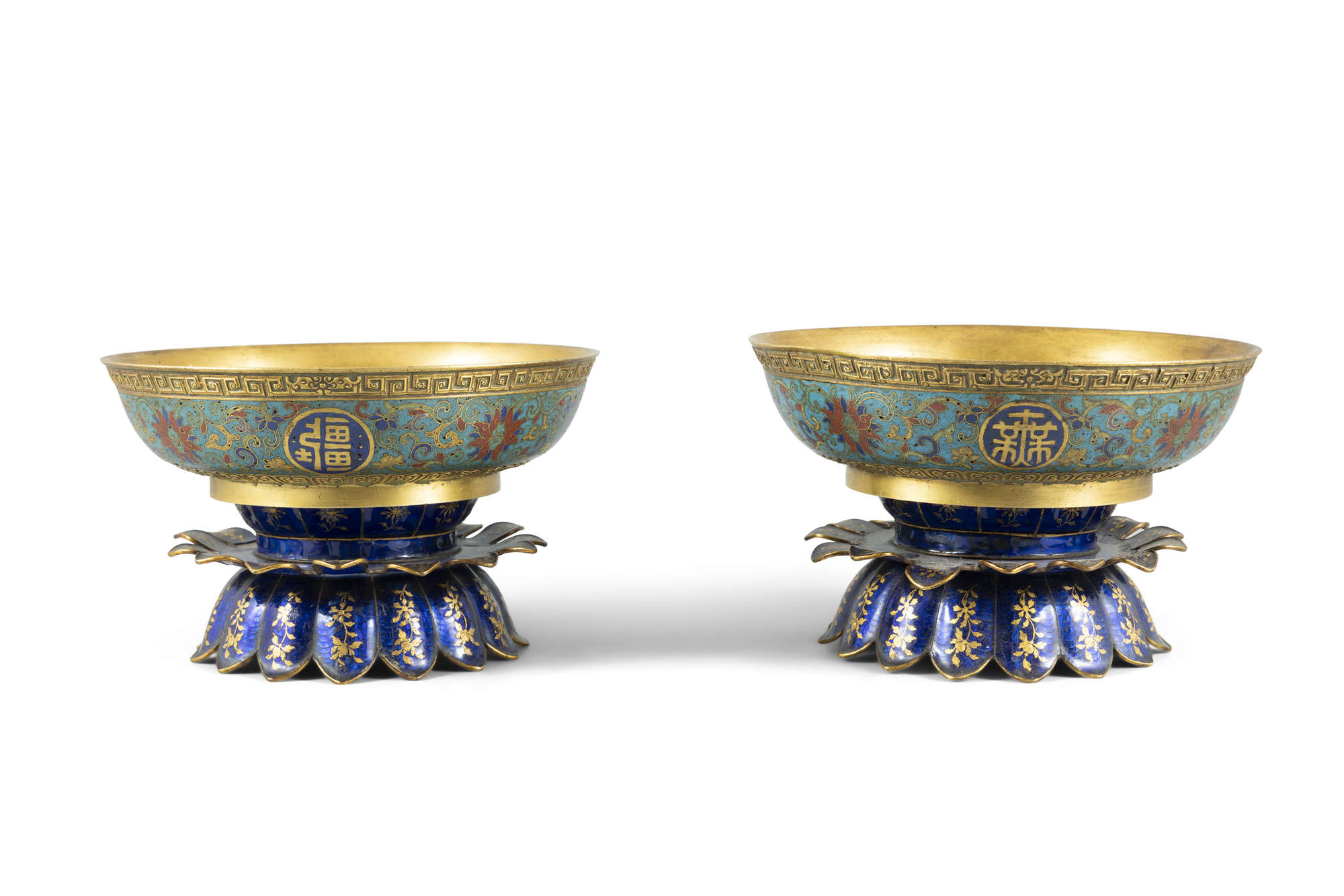
A PAIR OF GILT-BRONZE AND CLOISONNÉ ENAMEL 'WAN SHOU WU JIANG' BOWLS WITH BLUE ANG GILDING ENAMEL PAINTED FLOWER SHAPED STANDS
清乾隆 「子孫永寶」款...
A PAIR OF GILT-BRONZE AND CLOISONNÉ ENAMEL 'WAN SHOU WU JIANG' BOWLS WITH BLUE ANG GILDING ENAMEL PAINTED FLOWER SHAPED STANDS
清乾隆 「子孫永寶」款 掐絲琺瑯萬壽無疆盤一對及透明宝藍琺瑯貼金花卉紋菊瓣形底座
China, Qianlong period (1736-1795)
PLEASE NOTE NO INTERNET BIDDING IS AVAILABLE FOR THIS LOT, PLEASE REGISTER FOR A TELEPHONE BID ONLY. A DEPOSIT WILL BE REQUIRED.
请注意,此拍品不参与网络竞投,请联系拍卖公司进行电话委托。
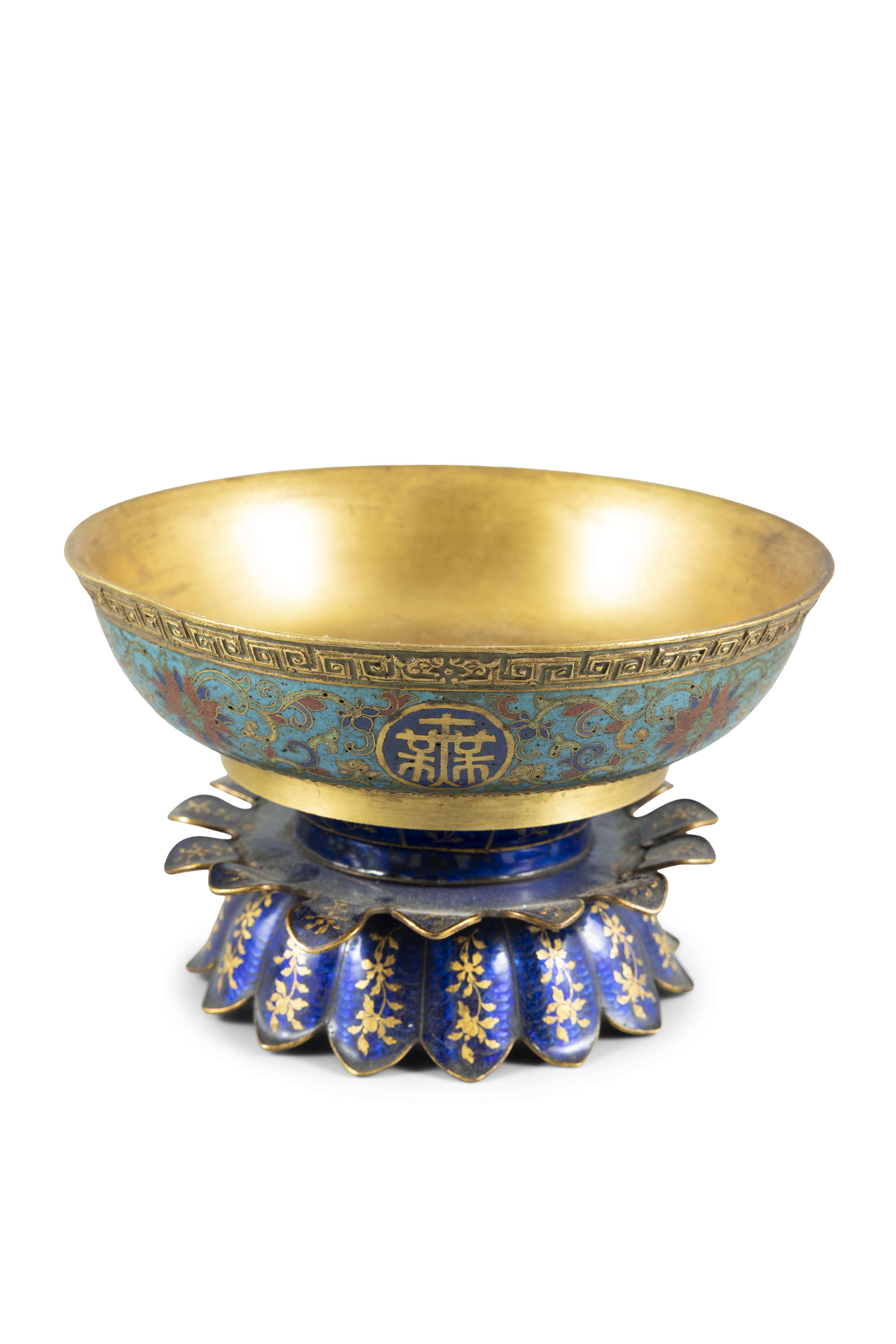
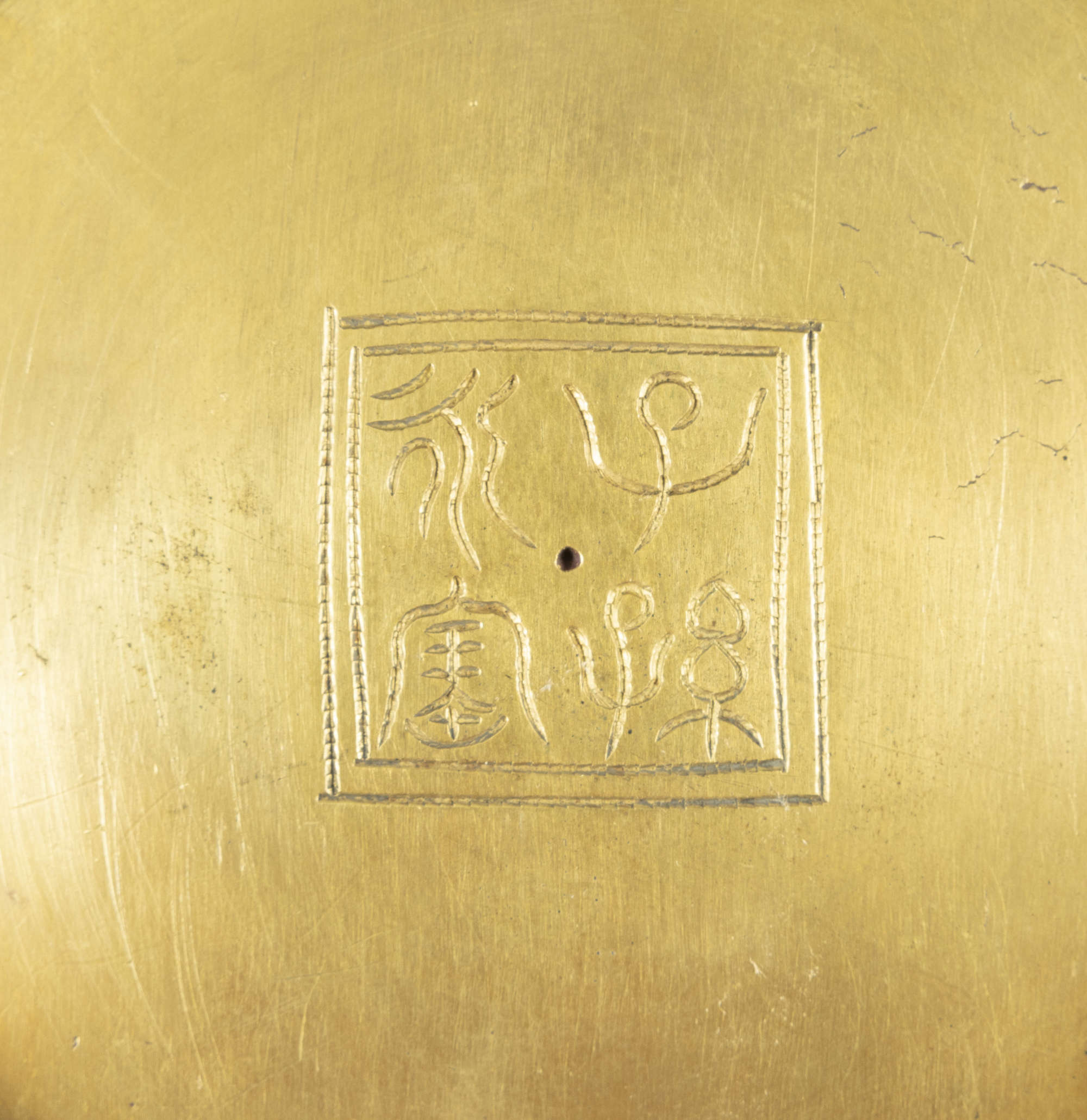
The bowls feature short rounded sides that rise from a splayed foot to a slightly flared rim. Its exterior is adorned with a cloisonné enamel turquoise-ground frieze, embellished with four roundels, each containing one of the characters "wan shou wu jiang" (Endless longevity without limit). These roundels are separated by meandering lotus sprays, while the rim is bordered with archaistic kui dragon scrolls and the foot with upright lappets. The interior, foot, and base are gilded, with the base incised with a four-character seal mark that reads "zi sun yong bao" (For eternal protection of sons and grandsons) within a double-square.
The chrysanthemum flower shaped stand is decorated with translucent cobalt blue cloisonné enamel glaze. The gold foil flower patterns, underneath the enamel glaze, shimmer subtly, imbuing the piece with a hazy beauty.
D.16.8cm – H(bowl).4.9cm H.(stand)6.1cm
Provenance: A very important private collection from south of Ireland
出處:愛爾蘭南部重要私人收藏。
NOTE
According to the Qing Palace Archives, "During the Grand Banquet for Longevity, only Emperor Qianlong used a complete set of Jingdezhen blue-and-white enamel bowls and plates, while others used porcelain." Since then, this type of cloisonné enamel "Longevity without Bounds" bowl has almost become a symbol of "Qianlong". Wherever there is "Qianlong", this utensil is present; wherever this utensil is found, it is exclusively for the emperor's use. Therefore, several important imperial palaces including the Forbidden City, Shenyang Imperial Palace, and the Imperial Summer Resort have equipped such tableware as a symbol of the emperor's "Longevity without Bounds". The "Longevity without Bounds" bowl, as the top-grade imperial dining utensil, is the most important object during Emperor Qianlong's Longevity Celebration and is regarded as the "supreme object in a bowl".
See a similar bowl in the collection of the National Palace museum, Taipei or in Liaoning provincial museum; also a set of ten bowls of deeper shape, decorated with this design, in the Palace Museum, Beijing, included in the Museum’s exhibition The Imperial Packing Art of the Qing Dynasty, Beijing, 2000, cat. no. 99
Transparent cloisonné, also known as "shaolan燒藍," was introduced from Europe. This technique involves applying transparent enamel to a base of gold, silver, or copper, which is then fired at low temperatures. The process often involves engraving decorative patterns on the surface of the vessel, followed by the application of various enamel colors such as blue, green, purple, yellow, and white, as well as the addition of gold or silver foil. Through the transparent enamel, the finished piece exhibits a dazzling and magnificent effect, making it highly valued for its aesthetic appeal. During the Qing Dynasty, this technique was only produced in Guangzhou, hence its alternate name "Guang cloisonné.".
A transparent cloisonné basin in the Palace Museum collection(故00118395)
故宫藏透明珐琅八吉祥纹面盆(故00118395)
All bids are placed in Euros (€)
Please note that by submitting a bid you are agreeing to our Terms & Conditions


 Have a similar item to sell?
Make Enquiry
Have a similar item to sell?
Make Enquiry